Low back pain is now the leading cause of disability worldwide. And you can feel that in real life. People are still going to work, driving, trying to sleep, trying to be present with family while their back keeps nagging them in the background.
And I hear this all the time. Someone comes in, sits down, and says, “I don’t know what to book. I just need relief.” Not because they’re confused. Because they’re tired of guessing. They don’t want to spend time and money on the wrong type of massage.
So let’s talk about Deep Tissue Massage vs Regular Massage. I’ll tell you what each type of massage is meant to do, how it usually feels, and how to choose based on what your body is doing right now.
What People Mean By “Regular Massage”
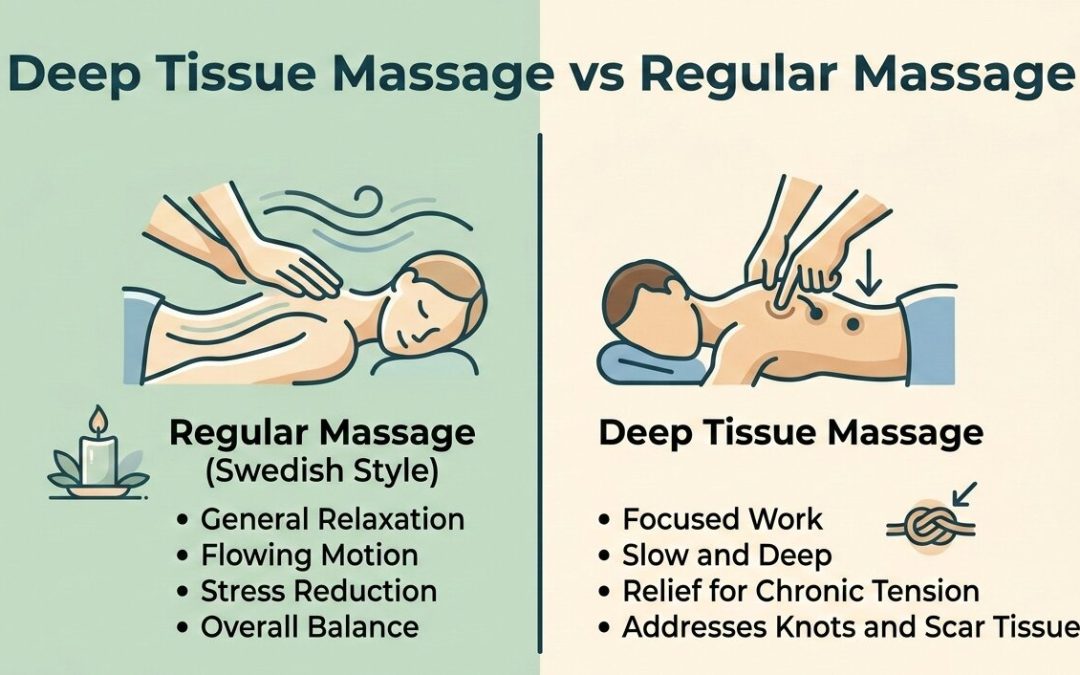
Most of the time, “regular” means swedish massage or something close to it. It’s the classic style many people picture when they think about massage therapy. The strokes are usually flowing, and the pressure is often light to medium, but it can be firm if you ask for it.
This style is great when your whole body feels worn down. It helps you settle, breathe deeper, and reduce stress without feeling like you went through a workout. Many sessions are set up as a full body massage because the goal is overall balance.
What is Deep Tissue Massage?
Deep tissue massage is slow, focused work. It goes into the deeper layers of the body where stubborn tension likes to hide. The pressure is steady, not rushed. The goal is to work through muscle tissue and the muscles and connective tissue around it.
This can help when you have tight muscles that keep coming back, or when one area always feels “stuck.” That’s because the problem is often deeper than the surface. Deep tissue works into a deeper layer of muscle, not just the top layer that relaxes quickly.
It can also help around old strain patterns and scar tissue. This does not mean anything gets “broken.” It’s about helping the tissue loosen and slide better, so your body can move more freely and feel less restricted.
Deep Tissue Massage vs Regular Massage: How It Feels On The Table
If you’re stuck choosing between Deep Tissue Massage vs Regular Massage, the “feel” matters. These are not the same type of massage with different names. One is more about pace. The other is more about depth and pressure.
| What You’re Comparing | Regular Massage (Often Swedish Massage) | Deep Tissue Massage |
| Main Purpose | Help you relax and reduce stress | Help relieve pain and release deep tension |
| Pressure Level | Light to medium | Medium to firm |
| Pace | More flowing and rhythmic | Slower and more focused |
| Depth In The Body | More on the top layer of muscle tissue | Works into the deeper layers and a deeper layer of muscle |
| Best For | General muscle tension, stress, feeling “worn out” | Chronic pain, stubborn knots, long-held tightness |
| Session Style | Often a full body massage | Often focused on 1–3 problem areas |
| Where It Targets | Broad areas like back, neck, shoulders, legs | Tight zones, deep knots, and “stuck” spots |
| Trigger Point Work | Sometimes, but not always | Common, especially for trigger points |
| Scar Tissue Focus | Usually not a main goal | Can help when scar tissue makes an area feel stuck |
| How It Feels During | Smooth, comforting, easy to settle into | Stronger on tight spots, more “specific” pressure |
| How It Feels After | Calm, loose, refreshed | Looser in the problem area, sometimes sore 24–48 hours |
| Range Of Massage Options | Wide range. Light to medium, relaxing styles | Wide range too. Can be moderate or deep, based on need |
| What Your Body Does | Nervous system settles down | Deep areas start letting go over time |
| Good Choice If You Want | Rest, reset, better sleep, less daily tension | Deep release, better movement, less repeat pain |
| Not Ideal If You | Want deep work on one painful spot | Hate focused pressure or bruise easily |
| Breathing Test | You should breathe slow and easy | You should still breathe normally. If you hold breath, it’s too much |
| What A Massage Therapist Needs To Know | Stress level, tender areas, pressure preference | Pain history, sensitive spots, injuries, and how deep is safe |
What Each Style Is Best For
Regular Massage
Regular massage is a strong choice when your main problem is stress. If your shoulders are up by your ears and your jaw stays clenched, this can help you reduce stress and come back to yourself.
It’s also great for broad, everyday muscle tension. You may not have one “bad” spot. You just feel stiff all over. A full body massage can help you feel loose from head to toe.
This style can support increased blood flow through the body too. That matters when you feel heavy, sluggish, or tight from sitting all day.
Deep Tissue
Deep tissue is often the right move when pain keeps coming back. If you’ve got chronic pain, deep work can help you address the deeper pattern, not just the surface tightness.
It also helps when you have knots that feel “stuck.” Many of those knots are linked to trigger points, which can refer pain to other areas. You feel it in your neck, but it may start in your shoulder blade area.
Deep work can be helpful when movement feels limited too. If your hip feels locked or your upper back feels glued, deep tissue may help that tissue slide and move again.
The Benefits Of Deep Tissue Massage People Actually Notice
Most people tell the therapist when they notice changes like these, especially when they get it done consistently.
- They feel fewer sharp “grabby” moments in the same spot.
- They feel looser during normal life, like driving, sleeping, or working at a desk.
- They notice better comfort during movement, because the body is not bracing as hard.
Deep work can also support circulation in the worked area. That’s where increased blood flow can matter. When tissue gets more fresh blood, it can feel warmer, softer, and less cranky afterward.
What Regular Massage Does Best For Most People
Regular massage works best when your nervous system needs a reset. It’s simple. It’s calming. It helps your body shift out of that constant “go mode.” People often report better sleep and less daily stress when they get this kind of work.
It can also help with general aches and tension without leaving you feeling beat up. That’s why so many people choose Swedish massage when they want comfort and steady relief.
Will Deep Tissue Make You Sore After?
Sometimes, yes. Not always, but it can happen. If you have very tight muscles or a stubborn knot, your body may feel “worked” for a day or two.
If that happens, keep it simple. Drink water. Take a warm shower. Go for an easy walk. Let your body settle. If soreness ever feels sharp or alarming, that’s not normal. Speak up so we can adjust.
Safety First: When To Avoid Or Modify Deep Pressure
There are times when deep work is not a good idea. This is not to make you afraid of deep massage work. It’s just about being smart and safe with your body.
If you have a known or suspected blood clot, or a history of DVT, you should avoid massage in that area until a medical professional clears you. Massage can increase circulation, and that matters when clot risk is involved.
If you have a recent injury, surgery, or fresh trauma, heavy work can make things worse. Early healing needs rest, not strong pressure and extra stimulation.
Pregnancy also deserves special care and proper training. I don’t approach it like a regular session with lighter pressure. Your body is changing fast, so positioning and comfort matter.
For care designed for pregnancy, Prenatal Massage is the right choice. If you have medical concerns, check with your healthcare provider first. Always share your trimester and any sensitive areas before the session starts.
How I Help You Choose The Right Type Of Massage
A session usually starts with a few simple questions so the massage matches what you actually need.
- Where does it hurt most right now?
- Is it sharp, dull, or more like tight pressure?
- Does it spread to another area?
- How long has it been there?
- Does stress make it worse?
- What movements make it flare up?
If you want overall relaxation and general easing of muscle tension, regular massage may fit better. If you want focused work to relieve pain and loosen stubborn tight spots, deep tissue may fit better. Sometimes a mix of both works best.
Can You Combine Deep Tissue And Regular Massage?
Yes, and it’s very common. In fact, a blended session is often the most comfortable way to get real results.
Here’s why it works so well:
- The body relaxes first. Lighter work helps reduce guarding and soften general muscle tension.
- Blood flow picks up. That can support increased blood flow, warmth, and easier movement in the area.
- Deep work lands better. Once the top muscle tissue eases, deeper pressure can reach the deeper layers with less resistance.
- You still get targeted relief. Deep tissue can then focus on tight muscles, stubborn knots, trigger points, and pain linked to chronic pain patterns.
- It feels more balanced. You get the calm of regular massage plus the focused work deep tissue is known for.
A simple way to think about it: start broad, then go specific.
If deep pressure feels too intense right away, beginning with regular massage techniques often makes the deeper work more effective and more comfortable.
What To Tell Your Massage Therapist Before You Start
If you want a good session, be clear with your massage therapist. Share what hurts, what movements feel hard, and what you want help with. Mention old injuries, surgeries, or any medical issues that could change the plan.
Also, say what pressure feels right. Some people prefer gentle work. Others want firm pressure. There’s no “correct” choice. It just needs to feel right for your body.
One more thing. If there are areas you don’t want touched, say so. You never have to push through discomfort just to be polite. Feeling safe matters.
My Simple Booking Rule At Engles Natural Healing & Massage
At Engles Natural Healing & Massage, my focus is on your well-being. I want you to leave feeling lighter, calmer, and more at home in your body. That might mean deep work, or it might mean a steady, soothing session that helps you breathe again.
There is a huge range of massage options out there. You do not need to try them all. You just need the one that helps you feel better now.